
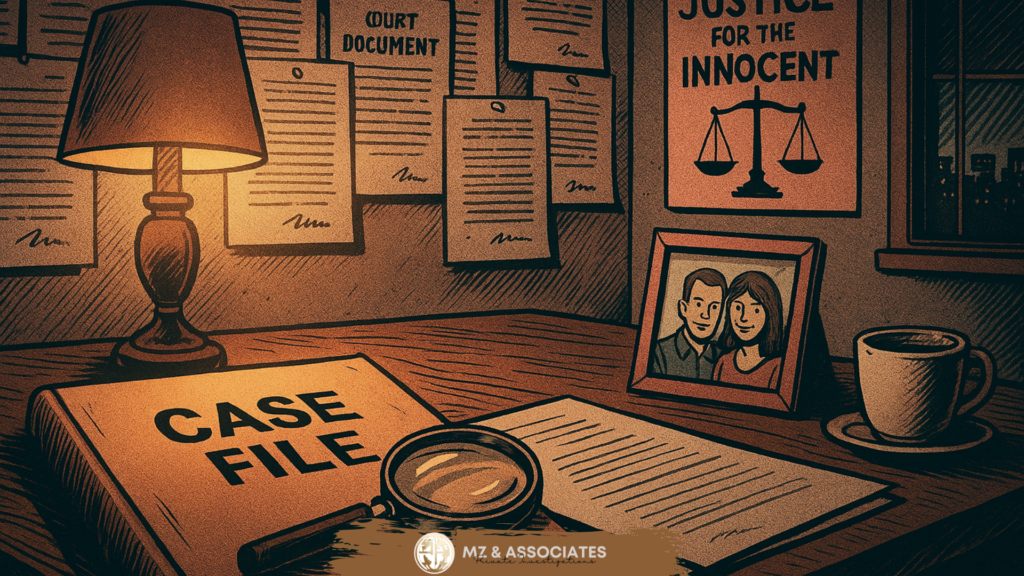
The Hidden Role of Private Investigators in Wrongful Conviction Cases
Uncovering truth, one file at a time.
Every time an innocent person is convicted, it’s not just a personal tragedy—it’s a failure of the justice system. Lost years. Broken families. Forgotten voices.
But while attorneys often get the spotlight in exoneration cases, there’s another key player working tirelessly behind the scenes: private investigators (PIs).
These unsung heroes are helping free innocent people by reopening cold cases, tracking down long-lost witnesses, and exposing errors or misconduct that led to injustice. And today, their role has never been more critical.
📂 Why Wrongful Convictions Happen
Despite the legal system’s best efforts, wrongful convictions still happen—more often than most realize. According to the National Registry of Exonerations, over 3,400 people in the U.S. have been exonerated since 1989, representing tens of thousands of lost years behind bars.
Common causes include:
Eyewitness misidentification
Prosecutorial misconduct
Faulty forensic evidence
Coerced confessions
Ineffective legal defense
Hidden or ignored evidence
That’s where private investigators come in—to reexamine what was missed or buried.
🔍 How Private Investigators Help Right the Wrong
1. Reinvestigating Cold Case Files
Most wrongful conviction cases involve decades-old files—where evidence was overlooked or improperly analyzed. PIs reopen these cases with fresh eyes.
✅ They audit original police reports
✅ Review timelines for inconsistencies
✅ Cross-reference witness statements
✅ Search for contradictions in testimony
Often, they find something no one thought to question at the time.
2. Tracking Down New or Forgotten Witnesses
Witnesses move. Change names. Or were never interviewed at all. Investigators use skip tracing, surveillance, and public records to find people who can shed new light on the case.
Case example:
A California man was exonerated in 2021 after a PI located a witness who had moved out of state and was never called to testify during the original trial. That witness confirmed the defendant’s alibi.
3. Interviewing with Sensitivity & Skill
PIs are trained to interview with empathy—often gaining insights that police or attorneys might miss. When a private investigator speaks with family members, former friends, or new leads, they often uncover details buried under trauma, fear, or forgotten memories.
4. Exposing Mishandled Evidence
In many wrongful conviction cases, physical evidence was:
Lost
Mishandled
Never tested using modern forensic methods
PIs work with forensic experts and legal teams to unearth and re-test evidence, using today’s advanced technology.
DNA evidence, in particular, has been central to overturning dozens of wrongful convictions when PIs pushed for retesting.
⚖️ Real-Life Impact: Exoneration Success Stories
The Central Park Five: Private investigators and legal advocates reinvestigated a highly publicized case, ultimately proving the five teenagers were wrongly convicted.
Ricky Jackson (Ohio): Served 39 years for a crime he didn’t commit. Private investigators helped uncover the fact that the sole eyewitness had been pressured into lying.
California Innocence Projects: Many exonerations credited to this program began with fieldwork by experienced investigators.
These are more than stories. They are proof that truth can rise, even years after a verdict.
💡 Why Private Investigators Are Uniquely Positioned
Unlike law enforcement, private investigators:
✅ Work independently, free from bureaucratic or political constraints
✅ Can follow leads law enforcement deemed “not credible”
✅ Focus entirely on the truth, not just building a case for one side
✅ Bring fresh perspective to a case grown cold
They’re not there to prove guilt or innocence. They’re there to uncover what really happened.
🔒 When Justice Fails, Persistence Matters
One of the most powerful tools PIs bring to these cases is relentless curiosity. When others give up, they keep digging. It may take years, dozens of interviews, or rechecking every timeline—but one detail can change a life.
💬 “We’re not miracle workers,” says one California-based investigator. “We just believe every person deserves to have every stone turned when their freedom is at stake.”
🛠 When Should a Private Investigator Be Hired?
If a convicted person claims innocence and has exhausted appeals
When there’s new evidence or witnesses to explore
If attorneys or advocacy groups need ground support
In cases involving controversial verdicts, unclear motives, or shaky forensics
Private investigators work side-by-side with innocence projects, criminal defense attorneys, and civil rights advocates.
🔚 Final Thought: Fighting for Justice in the Shadows
Private investigators may not wear robes or argue in court—but their work often changes lives forever.
They are the quiet force bringing truth to light, giving voice to the forgotten, and restoring justice to those who never should have been behind bars.
So, the next time you hear about a wrongful conviction being overturned—remember that somewhere in the shadows, a private investigator was likely turning over every stone to make it happen.