Surveillance in the U.S.: What’s Ethical, What’s Legal, and What Works
Surveillance 101: What Is It Really?
In private investigations, surveillance refers to the systematic observation of people, places, or activities to gather evidence. This may involve:
Physical surveillance (watching someone in person)
Vehicle tracking
Video or photo documentation
Use of drones
Monitoring digital activity (with legal permission)
It’s used in cases like:
✔️ Infidelity and domestic disputes
✔️ Workers’ compensation fraud
✔️ Corporate investigations (e.g., internal theft)
✔️ Child custody and family law cases
✔️ Insurance claim verification
⚖️ What’s Legal in the U.S.—And What’s Not
Private investigators are bound by state and federal laws, and crossing those boundaries can result in evidence being thrown out—or worse, criminal charges.
✅ What’s Legal (Generally Speaking):
✔️ Taking photos or videos in public spaces
✔️ Following someone in public without harassment
✔️ Using GPS tracking devices on vehicles you own or have consent to track
✔️ Recording without consent in public, depending on the state
✔️ Using drones in compliance with FAA rules
❌ What’s Illegal or Risky:
🚫 Tapping phones or recording private conversations without consent (in two-party consent states like California)
🚫 Trespassing on private property to install cameras
🚫 Installing GPS trackers on vehicles you don’t own or have consent to monitor
🚫 Peeking through windows, climbing fences, or any form of “invasion of privacy”
🚫 Using drones to film people through windows or over restricted areas
💡 Note: Surveillance laws vary by state. What’s legal in Texas might be a felony in California. That’s why working with licensed professionals is essential.
🤝 What’s Ethical in Surveillance?
Just because something is legal doesn’t always make it ethical. At MZ & Associates, we follow a strict ethical code that protects our clients and the dignity of all parties involved.
An ethical investigator will:
✔️ Respect the privacy of uninvolved individuals
✔️ Stop surveillance if it becomes harassment
✔️ Never manipulate or fabricate evidence
✔️ Use legal tools only in justifiable investigations
✔️ Be transparent with clients about what is and isn’t possible
Why it matters: Judges and attorneys often consider how evidence was obtained. Unethical tactics can damage a case—even if the findings are accurate.
🧰 What Works: Tools and Techniques That Deliver Results
When done professionally, surveillance can provide powerful, court-admissible evidence.
📹 What’s Working in 2025:
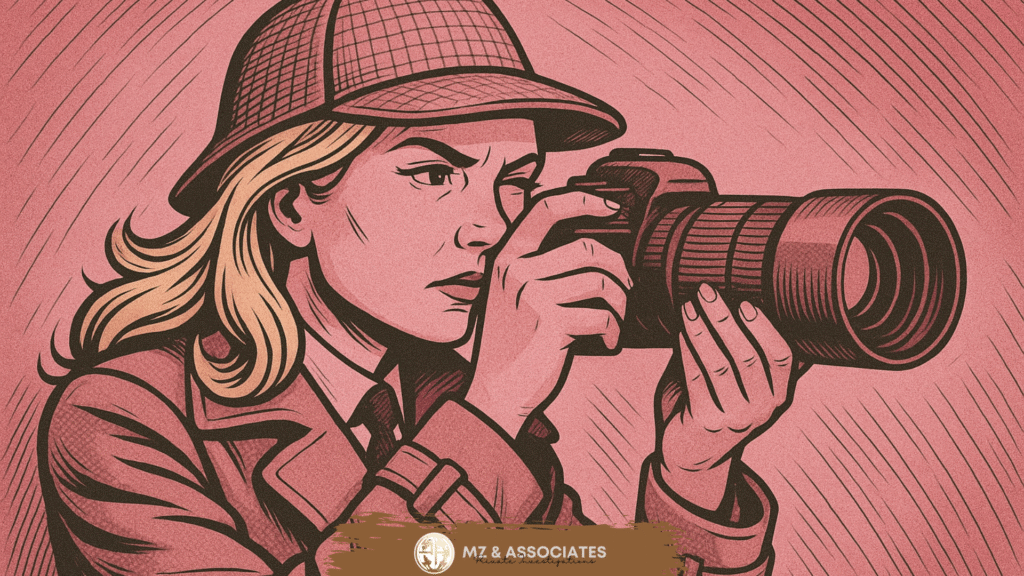
🔭 High-Quality Zoom Cameras
Used discreetly from a distance to document movement, behavior, or interactions—especially in family law and workers’ comp cases.
🚗 Mobile Vehicle Surveillance
Two investigators in unmarked vehicles can follow a subject over long distances without being detected.
📍 Strategic GPS Tracking
If legally permitted, this helps track behavior patterns (e.g., proving a person wasn’t at work when they claimed to be).
🚁 Drone Surveillance
Perfect for monitoring large areas like construction sites, farms, or rural locations—used with caution and FAA approval.
🧠 Behavior Pattern Analysis
Modern PIs study routines, habits, and public digital behavior to anticipate and document critical moments effectively.
👁️ Real-Life Example: Workers’ Comp Fraud Uncovered
A California company suspected an employee of faking a back injury while collecting full benefits.
What we did:
Legally tracked the employee’s public movements
Documented them lifting heavy furniture at a weekend flea market
Captured video and timestamps showing active behavior inconsistent with their claim
Result: The evidence was presented in court, leading to denial of benefits and a fraud investigation.
📌 Surveillance: A Tool of Truth—When Used Right
Surveillance is about documentation, not confrontation. It’s about gathering facts, not assumptions. And when done ethically and legally, it empowers clients to:
✔️ Protect themselves legally
✔️ Make informed decisions
✔️ Prevent financial loss or emotional damage
✅ Conclusion: Know the Law, Trust the Right Investigator
In the U.S., surveillance is a powerful but highly regulated practice. The right investigator knows how to navigate legal and ethical boundaries while still delivering solid, actionable results.
At MZ & Associates, we specialize in discreet, compliant, and effective surveillance investigations across California and beyond. Whether you’re facing a legal issue, a business risk, or a personal concern—our team brings clarity to complex situations.